Tropospheric clouds on Earth form when water vapor condenses on foreign particles called cloud condensation nuclei (CCN). While there have been suggestions that water could nucleate to form cloud droplets on atmospheric ions, at the beginning of the 20 th century John Aitken convincingly argued that the supersaturation needed was unrealistically high, so the omnipresent “dust” in the air would seed clouds at far lower supersaturations.
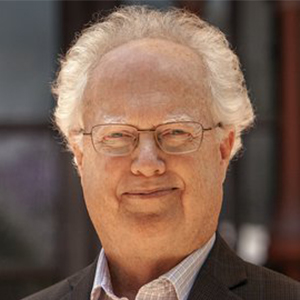
Rick Flagan,
California Institute of Technology
Viewed from space, the surfaces of worlds that have atmospheres, other than Earth and Mars, are rarely visible. The origins of the clouds and haze are generally assumed to be equilibrated with atmospheric vapors, or to be formed by homogeneous nucleation of vapors ranging from sulfuric acid on Venus, ammonia, ammonium hydrosulfide, and water ice on Jupiter, and vaporized rock constituents such as silicates, manganese sulfide, aluminum oxide in “Hot Jupiter” exoplanet clouds. Atmospheric simulations in chamber experiments, atmospheric measurements, and global atmospheric models of Earth aerosol formation suggest that half of the CCN in Earth’s atmosphere nucleate homogeneously from atmospheric vapors, but the nucleation process differs markedly from the classical nucleation theory that has been used in models of planetary atmospheres.
This seminar will examine how lessons from Earth may inform studies of clouds on other worlds and, perhaps, on early Earth.
Rick Flagan is the McCollum/Corcoran Professor of Chemical Engineering and Environmental Science and Engineering. He received his BS in Mechanical Engineering from the University of Michigan. He completed his SM and PhD from MIT, also in Mechanical Engineering, with a thesis on the formation of gaseous pollutants in combustion. Upon joining the Caltech faculty, he shifted his focus to aerosols. He is a leader in the broad field of aerosol science whose research focuses on atmospheric aerosols and their impacts on climate, air quality, and human health, and on the development of methods for measurement of aerosol particles from many micrometers to 1 nm in size. He has invented numerous instruments and experimental methods for measuring fine airborne particles, including one, the Scanning Mobility Particle Sizer (SMPS), that has become the primary instrument worldwide for the measurement aerosol particles smaller than 1 µm. His research has contributed substantially to present understanding of smog and the links between fine aerosol particles and clouds. He serves on the Board of Directors of the California Council for Science and Technology, an organization that provides scientific and technical support to the California legislature, administrative agencies, and governor. Among other awards, Prof. Flagan’s many contributions to aerosol and atmospheric science have been recognized with election to the National Academy of Engineering (2010) and the Fuchs Award (2006), the highest award in the field of aerosol science.