Category: Research and Innovation

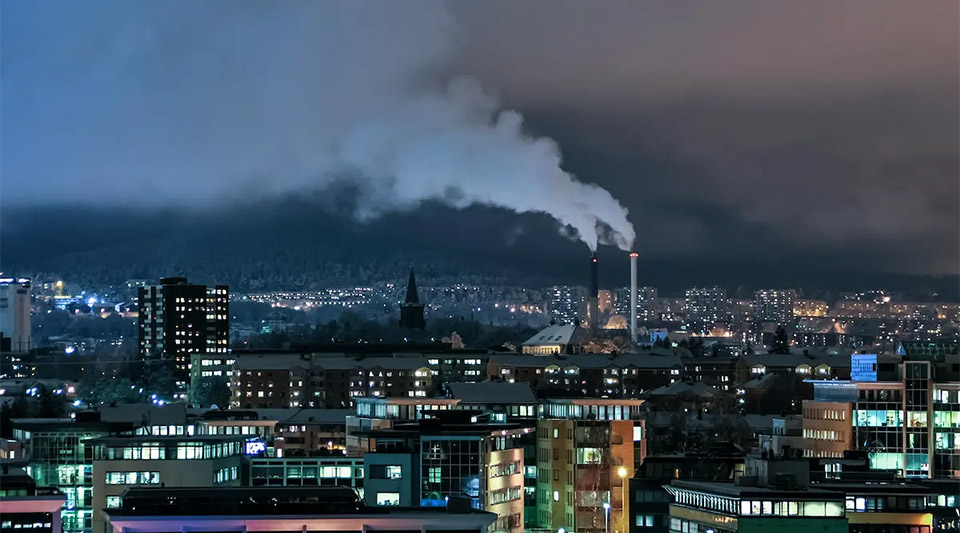
Nighttime city view with many lit buildings. Two industrial chimneys, one black and one white, glow red at their tops while releasing thick white smoke into the dark, cloudy sky.

New tool tracks cross-border pollution, revealing unequal distribution of risk, responsibility

Microscopic airborne particles known as PM 2.5 contribute to 100,000 premature deaths in the United States each year. A new University of Notre Dame study finds that 40 percent of these deaths can be attributed to pollution that crosses state lines, highlighting the impact of the problem and …

The Vaisala FD70 sensor, a piece of equipment used by researchers in northern Alaska, is decorated with white string lights, red beaded garland, and red Christmas ornaments.

Shedding Light on Ice Fog in the Darkness of Polar Night

Ice fog—a curtain of tiny ice crystals suspended above the earth’s surface—reduces visibility and makes air travel treacherous. How ice fog forms and why it persists is not entirely understood, and this has led to inaccurate forecasts, particularly visibility predictions that are critical …

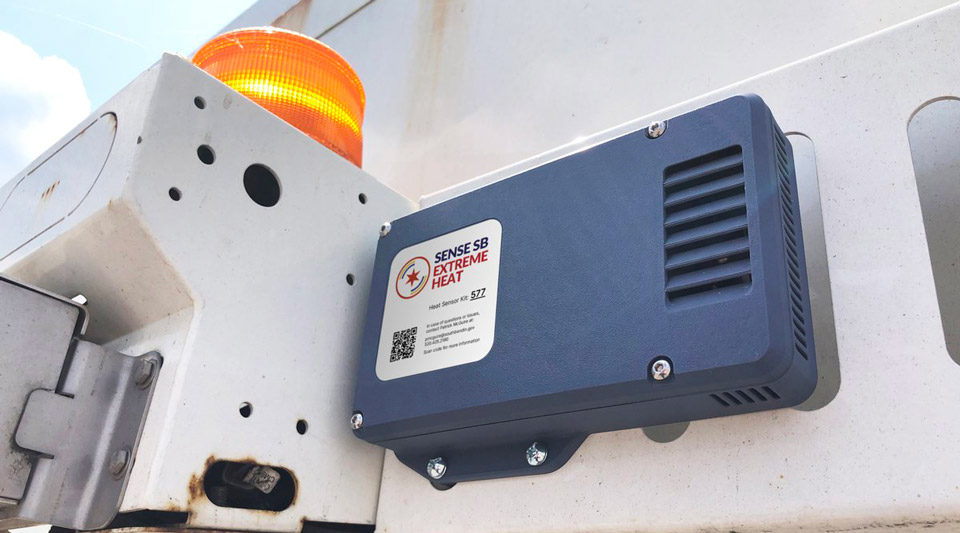
A gray SENSE SB Extreme Heat sensor, labeled "Heat Sensor Kit: 572", mounted on a white garbage truck next to an amber warning light.

Collecting more than trash: Researchers equip local garbage trucks to gather data on urban heat island effect

When heat waves hit, they don’t hit evenly. Cities often experience significantly higher temperatures than nearby rural areas, and areas with more pavement and concrete and fewer trees are more severely impacted. These urban heat islands, which disproportionately affect lower-income …

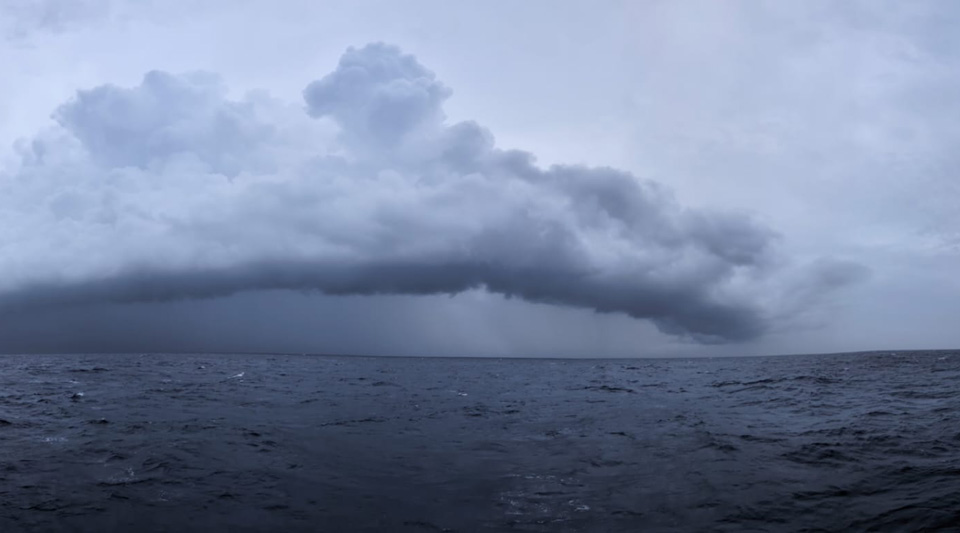
a giant storm cloud over ocean water

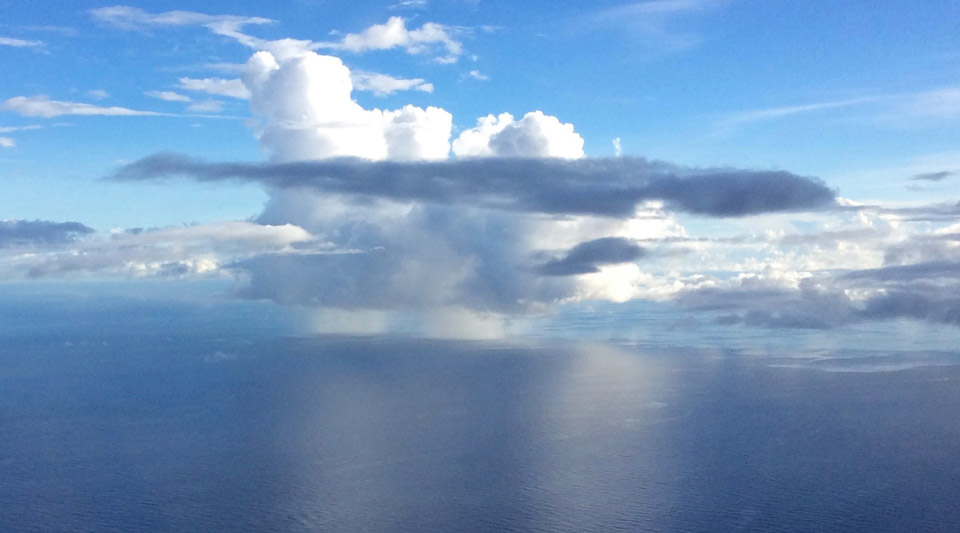
Monsoon mechanics: civil engineers look for answers in the Bay of Bengal

Off the southwestern coast of India, a pool of unusually warm water forms, reaching 100 feet below the surface. Soon after, the air above begins to churn, triggering the summer monsoon season with its life-giving yet sometimes catastrophic rains. To better understand the link between the …

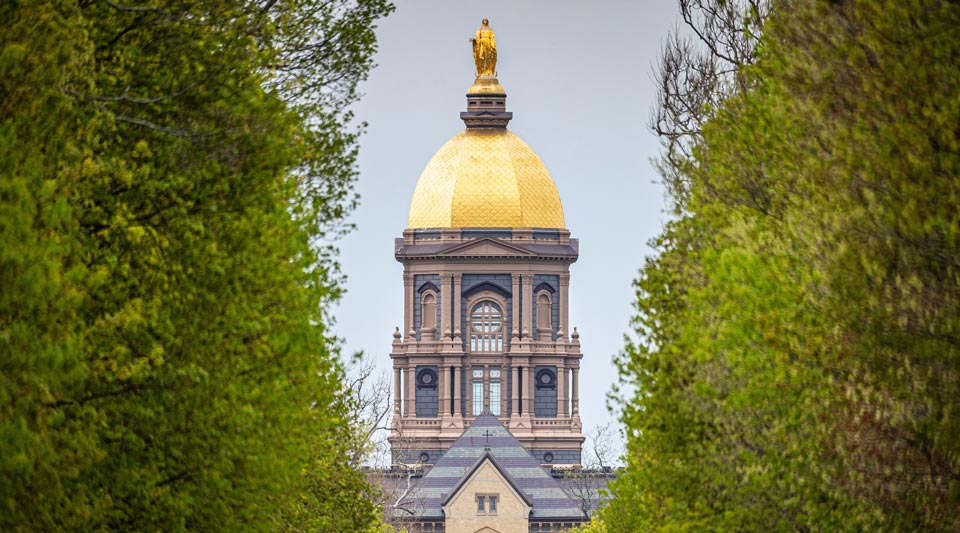
The Golden Dome framed by green trees

Notre Dame announces 2025 Strategic Framework Grant recipients

The University of Notre Dame has announced the awardees of its 2025 Strategic Framework Grant (SFG) Program. Launched in 2024, the program is an internal funding opportunity that stimulates engagement with the priorities outlined in Notre Dame 2033: A Strategic Framework. The program, sponsored …

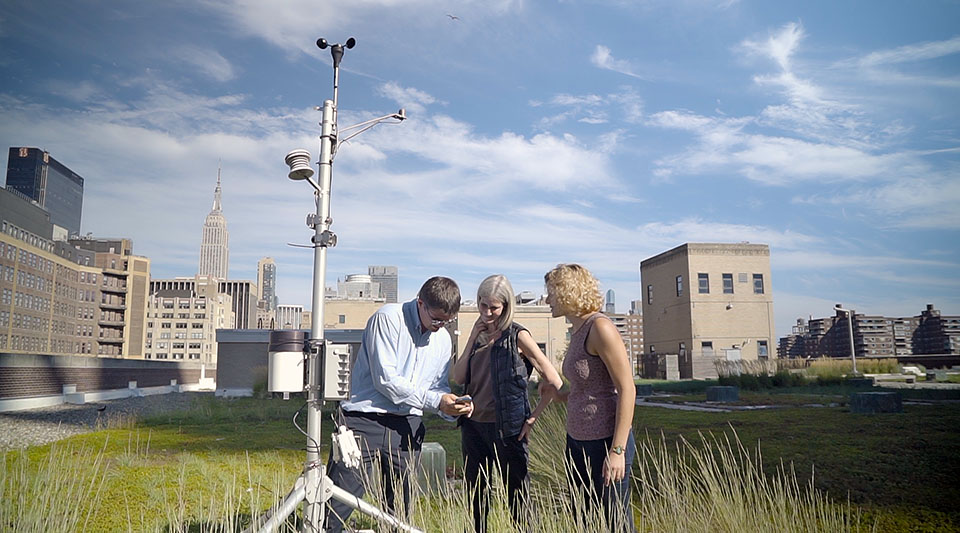
Patricia J. Culligan and two students stand on a green roof in New York City, examining data from a monitoring device. The roof has grass and plants, with the Empire State Building and other buildings visible in the background under a clear blue sky.

Optimizing for people: a conversation with Patricia Culligan on urban green infrastructure

As urban populations grow and temperatures rise, city dwellers will rely on cool, green, shady places as never before. Green infrastructure—such as green roofs, rain gardens, urban forests—offer sustainable solutions to the water management and heat dissipation challenges unique to cities. …

Ming Hu

Notre Dame researchers create new tool to analyze embodied carbon in more than 1 million buildings in Chicago

The built environment — which includes the construction and operation of buildings, highways, bridges and other infrastructure — is responsible for close to 40 percent of the global greenhouse gas emissions contributing to climate change. While many building codes and benchmarks have …

Paola Crippa

Downwind states face disproportionate burden of air pollution

A recent Supreme Court decision to block a federal rule curbing interstate air pollution further complicates efforts to reduce emissions and adds to an already disproportionate burden on “downwind” states, according to researchers at the University of Notre Dame. “Toxic air pollution is …

Tracy Kijewski-Correa

Notre Dame researcher champions local leadership for life-saving disaster assessment

The earthquake that struck southwest Haiti in August 2021 killed thousands of people and left more than half a million seeking help. New research by a University of Notre Dame expert finds that the assessment of this disaster can serve as a model for evaluating future disasters and making …

Notre Dame study demonstrates that bacterial biofilms are not the same throughout, possibly describing one reason common antibiotics may fail

The bacterium Pseudomonas aeruginosa is almost everywhere — in the soil, water, and vegetation. While it does not cause disease for most people, it can lead to serious disease or death for people with compromised immune systems. The bacteria easily adhere to surfaces, creating structures …